
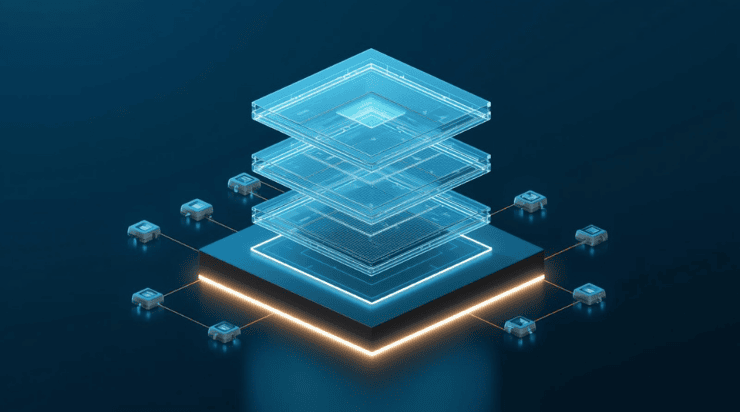
Introduction: Why Scalability Still Defines Blockchain Success
Blockchain technology promised decentralization, transparency, and trustless systems. Yet scalability remains the single biggest factor limiting widespread adoption.
In 2026, blockchain networks are faster and more mature than ever—but demand has also exploded. Enterprises now expect blockchains to handle thousands of transactions per second, low latency, predictable costs, and regulatory readiness.
This is where blockchain scalability solutions in 2026 become critical—not as experiments, but as production infrastructure.
This article breaks down the main scalability approaches, their trade-offs, and real-world use cases, so businesses can choose based on facts—not hype.
What Blockchain Scalability Really Means
Scalability refers to a blockchain’s ability to handle increasing transaction volume without sacrificing:
- Security
- Decentralization
- Performance
- Cost efficiency
Most first-generation blockchains struggled because they optimized security first, leaving throughput limited. The industry now solves this through layered and hybrid models.
The Blockchain Scalability Trilemma (Still Relevant in 2026)
Every scalability decision balances three forces:
- Security – Resistance to attacks and manipulation
- Decentralization – Distributed control and trust
- Scalability – Transaction speed and capacity
Modern blockchain scalability solutions focus on optimizing two without fully sacrificing the third.
Core Blockchain Scalability Solutions in 2026
1. Layer 2 Scaling Solutions
Layer 2 solutions process transactions off the main blockchain while anchoring final settlement on Layer 1.
Common Types:
- Rollups (Optimistic & ZK)
- State channels
- Sidechains
Advantages:
- High transaction throughput
- Lower fees
- Maintains Layer 1 security
Trade-offs:
- Added complexity
- User experience fragmentation
- Dependency on Layer 1 availability
Best for:
DeFi, NFTs, gaming, high-volume applications
2. Sharding
Sharding divides a blockchain into multiple parallel chains (shards), each processing its own transactions.
Advantages:
- Native scalability
- Parallel processing
- Long-term infrastructure solution
Trade-offs:
- Complex implementation
- Cross-shard communication challenges
- Security coordination required
Best for:
Large public blockchains and ecosystem-wide scaling
3. Modular Blockchains
Modular architectures separate core blockchain functions:
- Execution
- Consensus
- Data availability
Instead of one chain doing everything, specialized layers handle different roles.
Advantages:
- Flexibility
- Easier upgrades
- Custom performance tuning
Trade-offs:
- Integration complexity
- New security assumptions
Best for:
Enterprise blockchains, custom networks, infrastructure builders
4. App-Specific Blockchains (Appchains)
Rather than sharing a general-purpose chain, applications run on dedicated blockchains optimized for their needs.
Advantages:
- Full control over performance
- Predictable costs
- Custom governance
Trade-offs:
- Smaller security base
- Requires own validator ecosystem
Best for:
Games, enterprise workflows, supply chains
5. High-Performance Layer 1 Blockchains
Some newer Layer 1 blockchains focus on raw throughput using optimized consensus and execution models.
Advantages:
- Simplicity
- Unified ecosystem
- High performance
Trade-offs:
- Potential decentralization concerns
- Hardware requirements
Best for:
High-frequency transactions, consumer apps
Scalability Trade-Offs Businesses Must Understand
Cost vs Performance
Faster chains often trade decentralization for speed. Businesses must decide whether trust assumptions align with their risk tolerance.
Security vs Flexibility
Layered architectures improve performance but introduce more components that must be secured.
Ecosystem vs Control
Public networks offer liquidity and adoption. Private or app-specific chains offer control but require ecosystem building.
Real-World Use Cases in 2026
Financial Services
- High-frequency settlements
- Tokenized assets
- Cross-border payments
Supply Chain & Logistics
- Real-time tracking
- Multi-party data sharing
- Auditability at scale
Gaming & Digital Assets
- Microtransactions
- In-game economies
- Real-time interactions
Enterprise Automation
- Identity management
- Compliance workflows
- Secure data coordination
How to Choose the Right Scalability Solution
Ask these questions:
- How many transactions per second are required?
- Is decentralization a regulatory or trust requirement?
- Are costs predictable?
- Does the ecosystem matter?
- Can the solution evolve over time?
The best blockchain scalability solutions in 2026 are chosen strategically—not emotionally.
Ready to build scalable blockchain systems that work in the real world?
Talk to our experts to design, optimize, or scale blockchain infrastructure built for performance, security, and long-term growth.
FAQs
1. What are blockchain scalability solutions in 2026?
Blockchain scalability solutions in 2026 are technologies and architectures that allow blockchains to process large transaction volumes efficiently without sacrificing security or reliability.
2. Why is blockchain scalability still important in 2026?
Because enterprise adoption, real-time payments, and digital assets require blockchains to handle consistent, high traffic without delays or unpredictable costs.
3. Are Layer 2 solutions still relevant in 2026?
Yes. Layer 2 solutions remain critical for reducing fees and improving transaction speed while maintaining the security of the underlying blockchain.
4. What is the biggest trade-off in blockchain scalability?
The main trade-off is balancing performance with decentralization and security. Faster systems often require stronger coordination or trust assumptions.
5. Which blockchain scalability solution is best for enterprises?
Enterprises typically prefer modular architectures or permissioned Layer 2 solutions because they offer predictable performance, compliance flexibility, and operational control.
6. Does scalability reduce blockchain security?
Not inherently. Well-designed scalability solutions preserve security by anchoring transactions to secure base layers or distributing risk across components.
7. How does sharding improve blockchain scalability?
Sharding increases scalability by splitting the network into parallel sections that process transactions simultaneously instead of sequentially.
8. Are app-specific blockchains scalable?
Yes. Appchains scale efficiently by dedicating resources to a single application, avoiding congestion from unrelated activity.
9. What industries benefit most from blockchain scalability?
Finance, logistics, gaming, supply chain management, and enterprise automation benefit the most due to high transaction and data coordination needs.
10. How should businesses choose a scalability approach?
Businesses should evaluate transaction volume, cost predictability, regulatory requirements, ecosystem needs, and long-term growth plans before selecting a solution.
11. Is blockchain scalability a solved problem in 2026?
Scalability is significantly improved, but not “solved.” It is now a strategic design choice rather than a technical limitation.
"Blockchain scalability in 2026 is no longer theoretical—it’s a strategic decision shaped by cost, security, performance, and real-world adoption requirements"